Keynote speakers
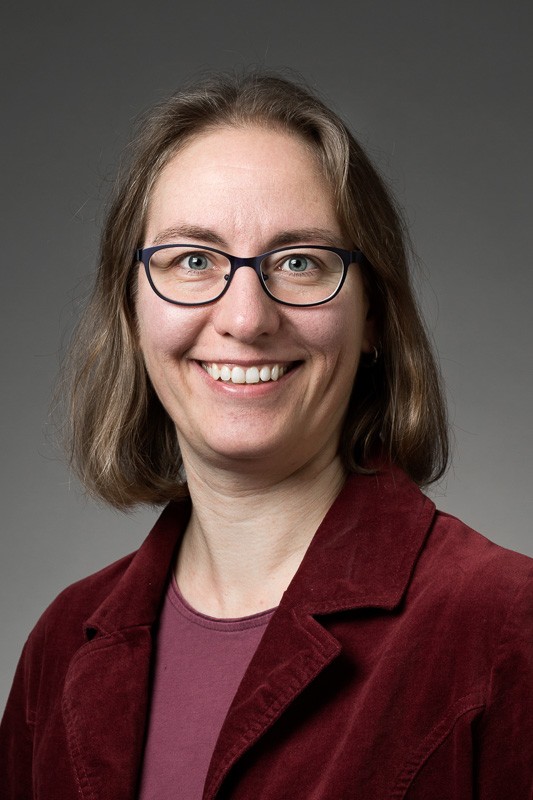
Ira Assent
Full professor of Computer Science Aarhus University, Denmark
Title Reliable Explanations for Data Analytics
Abstract
We witness dramatic improvements in AI performance which fundamentally change the field of data analytics. In practice, however, performance is not all: the ability to inspect AI model predictions is crucial in many data analytics applications. In this keynote, I describe XAI (eXplainable AI) methods that focus on reliability of explanations to support the analysis of models with complex structure in clustering, anomaly detection or classification, providing robust approaches to scrutinising models in data analytics.
Short Bio
Ira Assent is full professor of computer science at Aarhus University, Denmark, where she heads the Data-Intensive Systems research group, and the Big Data Analysis research within the DIGIT Aarhus University Centre. She is a co-lead of the Collaboratory Causality & Explainability in the Pioneer Center for Artificial Intelligence Denmark. She is a (part-time) director of the Institute for Advanced Simulation, Data Analytics and Machine Learning (IAS-8) at the Forschungszentrum Juelich, Germany. Her research interests include explainable AI, unsupervised and supervised learning, efficient and scalable algorithms for data analysis and data management.
Francesca Dragotto
Associate Professor of Language Teaching and Applied Linguistics University of Rome Tor Vergata
Title Artificial tools and natural social exclusion: a linguistic perspective
Abstract
The talk reflects on the role of data in training artificial intelligence algorithms, comparing it with how humans acquire language and knowledge. It shows how the quality and type of data influence what AI learns, similarly to how linguistic exposure shapes human learning. Finally, it highlights the risk that training datasets reproduce and amplify social inequalities already present in society.
Short Bio
Francesca Dragotto is a linguist at the University of Rome “Tor Vergata,†where she teaches in humanities, medical, and technological degree programs. Her research has evolved from Latin linguistics and etymology to the languages of communication, linguistic interdiction, and Critical Discourse Studies, with a focus on gender in discourse and on the relationship between language, media/technologies, and society. She has authored around one hundred scientific publications and over two hundred outreach works. Since 2020, she has served as scientific director of the RAI monitoring reports on the representation of women, pluralism in topics and languages, and the promotion of social cohesion.